International Union of Pure and Applied Chemistry
International authority for chemical nomenclature and standards.

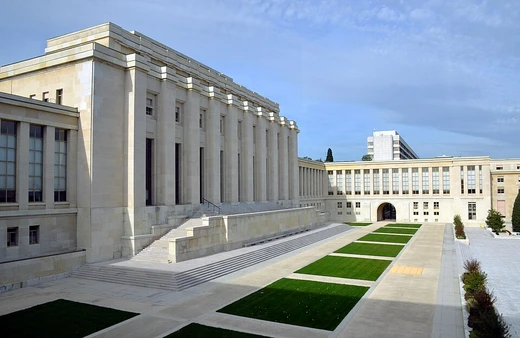
The International Union of Pure and Applied Chemistry (IUPAC) is an international federation of National Adhering Organizations that works for the advancement of the chemical sciences, especially by developing nomenclature and terminology. It is a member of the International Science Council (ISC) and is registered in Geneva, Switzerland, with its administrative office, the IUPAC Secretariat, in Research Triangle Park, North Carolina, United States. IUPAC was established in 1919 as the successor of the International Congress of Applied Chemistry and is best known for standardizing nomenclature in chemistry, including the naming of chemical elements and compounds, as well as atomic weights.
- Headquarters
- Geneva, Switzerland (registered); Research Triangle Park, North Carolina, United States (secretariat)
Lore & Background
The need for an international standard for chemistry was first addressed in 1860 by a committee headed by German scientist Friedrich August Kekulé von Stradonitz, which created the first international naming system for organic compounds. These ideas evolved into the official IUPAC nomenclature of organic chemistry. IUPAC as such was established in 1919. One notable country excluded from early IUPAC was Germany, due to prejudice by the Allied powers after World War I. Germany was admitted in 1929, but Nazi Germany was removed during World War II. East and West Germany were readmitted in 1973. Since World War II, IUPAC has focused on standardizing nomenclature and methods in science.
IUPAC is governed by several committees, including the Bureau, CHEMRAWN Committee, Committee on Chemistry Education, Committee on Chemistry and Industry, Committee on Printed and Electronic Publications, Evaluation Committee, Executive Committee, Finance Committee, Interdivisional Committee on Terminology, Nomenclature and Symbols, Project Committee, and Pure and Applied Chemistry Editorial Advisory Board. Any committee may start a project, and the Bureau and Executive Committee oversee operations. IUPAC also establishes rules for harmonized spelling of chemicals, such as 'aluminium' rather than 'aluminum', and 'sulfur' rather than 'sulphur'.
In 2015, IUPAC denounced the use of chlorine as a chemical weapon in a letter to Ahmet Üzümcü, director of the Organisation for the Prohibition of Chemical Weapons (OPCW), expressing concern about chlorine weapon usage in the Syrian civil war and other places. The letter stated that the indiscriminate attacks were of concern to chemical scientists and engineers globally.
Reader's Guide
IUPAC's significance lies in its role as the recognized world authority for developing standards for naming chemical elements and compounds, as well as for standardizing atomic weights through its Commission on Isotopic Abundances and Atomic Weights (CIAAW). Its work extends beyond chemistry into biology and physics, including standardizing nucleotide base sequence code names and publishing books for environmental scientists, chemists, and physicists. IUPAC also coordinates events like the International Year of Chemistry in 2011 with UNESCO, aiming to increase public appreciation of chemistry and encourage young people to contribute to the field. The organization's legacy is rooted in the 1860 international conference that first addressed the need for a systematic naming system for organic compounds, making IUPAC one of the most important historical international collaborations of chemistry societies. Its committees and projects continue to standardize nomenclature, improve education, and publish works across multiple scientific disciplines.
Did You Know?
- IUPAC was established in 1919 as the successor of the International Congress of Applied Chemistry.
- Germany was excluded from early IUPAC after World War I and was only admitted in 1929; Nazi Germany was removed during World War II, and East and West Germany were readmitted in 1973.
- IUPAC recommends 'aluminium' rather than 'aluminum', and 'sulfur' rather than 'sulphur'.
- In 2015, IUPAC denounced the use of chlorine as a chemical weapon in a letter to the director of the Organisation for the Prohibition of Chemical Weapons.
More in International Organizations And Agreements 1-24
Spotted an error? Know more?
This is a living reference — every entry is fact-audited, and reader corrections feed straight into our audit queue. Suggest an edit · See this site's audit record