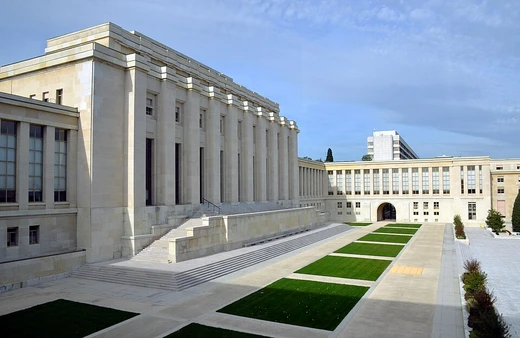
Inter-Parliamentary Union
Global organization of parliaments promoting democracy and cooperation.

The Inter-Parliamentary Union (IPU) is an international organization of national parliaments, founded in 1889 as the Inter-Parliamentary Conference by statesmen Frédéric Passy of France and William Randal Cremer of the United Kingdom. Its primary purpose is to promote democratic governance, accountability, and cooperation among its members, and it has played a key role in establishing international institutions such as the Permanent Court of Arbitration, the League of Nations, and the United Nations.
- founded
- 1889
- headquarters
- Geneva, Switzerland (since 1921)
- members
- 183 national parliaments (as of 2025)
- founders
- Frédéric Passy (France) and William Randal Cremer (United Kingdom)
- nobel_laureates_associated
- 8
- current_president
- Dr. Tulia Ackson (elected October 2023)
- current_secretary_general
- Martin Chungong (Cameroon)
Lore & Background
The IPU was established in 1889 with nine members: Austria-Hungary, Belgium, Denmark, France, Hungary, Italy, Liberia, Spain, and the United Kingdom. Its initial objective was the arbitration of conflicts, and it played an important part in setting up the Permanent Court of Arbitration in The Hague. Over time, its mission evolved towards promoting democracy and inter-parliamentary dialogue, and it has worked for the establishment of inter-governmental institutions including the United Nations.
The organization's headquarters have moved several times: Bern (1892–1911), Brussels (1911–1914), Oslo (1914–1920), and Geneva (1921–present). Eight leading personalities of the IPU have received Nobel Peace Prizes, including founders Frédéric Passy (1901) and Randal Cremer (1903). The IPU has permanent observer status at the United Nations General Assembly and cooperates closely with the UN, signing an agreement in 1996 that recognized the IPU as the world organization of parliaments.
Reader's Guide
The Inter-Parliamentary Union is significant as the first permanent forum for political multilateral negotiations, founded to promote peace through arbitration. Its legacy includes facilitating the development of international law and institutions such as the Permanent Court of Arbitration, the League of Nations, and the United Nations. The IPU has advanced gender parity among legislatures, empowered youth participation in politics, and promoted sustainable development. With 183 member parliaments as of 2025, it remains a key platform for inter-parliamentary dialogue and cooperation. The organization's influence is reflected in its eight Nobel Peace Prize laureates and its permanent observer status at the United Nations General Assembly. Despite some member states not being democratic by indexes, the IPU continues to advocate for democratic governance and accountability worldwide.
Did You Know?
- The IPU was founded in 1889 as the Inter-Parliamentary Conference by Frédéric Passy of France and William Randal Cremer of the United Kingdom.
- Eight individuals associated with the IPU have received Nobel Peace Prizes, including Passy (1901) and Cremer (1903).
- The United States Congress has been a member of the IPU since 1935, and the U.S. has hosted three IPU conferences.
- The IPU's headquarters moved from Bern to Brussels, then Oslo, and finally to Geneva in 1921.
Origins and the Birth of a Permanent Forum
The Inter-Parliamentary Union traces its roots to a bold 1889 initiative by two visionaries—Frédéric Passy of France and William Randal Cremer of Britain—who envisioned the very first standing venue where political leaders could negotiate multilaterally. What began as the Inter-Parliamentary Conference was, at its core, a mechanism for arbitrating disputes between nations. The founding gathering on 30 June 1889 drew eight signatory parliaments: Austria-Hungary, Belgium, Denmark, France, Italy, Liberia, Spain, and the United Kingdom, with the United States present but declining to formally adopt the arbitration treaty. Over the decades, the organization's identity shifted dramatically. Early membership was open to individual legislators, but the IPU gradually restructured so that the legislatures of sovereign states themselves became the members. This transformation reflected a broader maturation of international diplomacy, moving from personal networks of statesmen toward institutionalized inter-state cooperation.
A Living Architecture of Governance
The IPU operates through a layered system of organs designed to balance broad representation with efficient administration. At the top sits the Assembly, which convenes twice a year and brings together delegates appointed by member parliaments to debate and adopt resolutions on global challenges. Standing Committees, whose scope is set by the Governing Council, prepare reports and draft resolutions for the Assembly's consideration, with a rule capping any single delegate at ten votes. The Governing Council, composed of three sitting parliamentarians from each member state, meets roughly twice yearly and holds the power to elect the IPU President for a three-year term, select the Executive Committee, and appoint the Secretary General. The Executive Committee—comprising the President, fifteen elected members drawn from different parliaments and geopolitical groups, and the President of the Women Parliamentarians' Coordinating Committee—serves as the administrative engine. Notably, only legislators from states where women enjoy both voting and candidacy rights are eligible for this body. The current President is Dr. Tulia Ackson of Tanzania, the second woman to hold the post, elected in October 2023, while Martin Chungong of Cameroon leads the Secretariat as Secretary General.
Shaping the Architecture of Peace
Few organizations can claim as direct a lineage to the institutions that underpin modern international order as the IPU can. From its earliest days, the union championed the arbitration of conflicts and played a formative role in establishing the Permanent Court of Arbitration in The Hague. That foundational work in dispute resolution rippled outward: the IPU contributed to the intellectual and institutional groundwork for the League of Nations and, later, the United Nations. Today it holds permanent observer status at the UN General Assembly, allowing it to participate in and sponsor international conferences and forums that shape global policy. The organization's influence on the rule of law and multilateral cooperation is perhaps best captured by a remarkable statistic: eight individuals closely associated with the IPU have been awarded the Nobel Peace Prize, spanning from Frédéric Passy in 1901 through Ferdinand Buisson in 1927, and including figures from France, Switzerland, the United Kingdom, Denmark, Belgium, and Norway. This concentration of Nobel recognition underscores how deeply the IPU's early peacebuilding mission was woven into the fabric of twentieth-century diplomacy.
A Global Parliament of Parliaments
As of 2025, the IPU counts the national parliaments of 183 countries among its full members, alongside 15 associate members—predominantly regional parliamentary assemblies admitted by the Governing Council. The organization's geographic footprint is nearly universal, yet one conspicuous absence stands out: the United States, whose Congress has never formally joined, even though the 12th (1904), 23rd (1925), and 42nd (1953) IPU conferences were hosted on American soil. Membership carries concrete obligations: each parliament is expected to table IPU resolutions before its own legislature, relay them to the national government, push for their implementation, and report back to the IPU Secretariat on progress, particularly through annual reporting. The union's physical home has also traveled—Bern (1892–1911), Brussels (1911–1914), Oslo (1914–1920)—before settling in Geneva in 1921, where it remains to this day. This peripatetic history mirrors the turbulent geopolitical landscape of the early twentieth century, yet the organization's endurance speaks to the persistent demand for a structured space where legislatures from every corner of the world can convene.
Frequently Asked Questions
What is the Inter-Parliamentary Union?
The IPU is a worldwide association of national parliaments dedicated to advancing democratic governance, accountability, and cross-border cooperation. It was established in 1889 and has operated from Geneva, Switzerland, since 1921.
Who founded the IPU and when?
French statesman Frédéric Passy and British figure William Randal Cremer launched the organization in 1889 under the original title Inter-Parliamentary Conference. Their goal was to create a standing platform where elected legislators from different countries could collaborate.
What is the IPU's role and what powers does it hold?
The IPU does not legislate or enforce policy; it serves as a forum for parliaments to exchange ideas, support democratic institutions, and coordinate on shared challenges. It also helped lay the groundwork for major international bodies including the Permanent Court of Arbitration, the League of Nations, and the United Nations.
How big is IPU membership and who leads it now?
As of 2025, 183 national parliaments hold membership in the union. Its current president is Dr. Tulia Ackson, who assumed the role in October 2023.
Why is the IPU considered historically significant?
As one of the oldest continuously operating international organizations, it predates the United Nations by more than half a century. Eight Nobel laureates have been linked to the IPU, and its early work directly contributed to the creation of several foundational global institutions.
More in International Organizations And Agreements 1-24
Spotted an error? Know more?
This is a living reference — every entry is fact-audited, and reader corrections feed straight into our audit queue. Suggest an edit · See this site's audit record