International Organization for Standardization
Independent developer of global technical and nontechnical standards.

The International Organization for Standardization (ISO) is a non-governmental, independent body that creates international standards. It was established on 23 February 1947 and, as of July 2024, has released more than 25,000 standards covering nearly every area of technology and manufacturing. Its work spans both technical and non-technical fields, such as manufactured goods, technology, food safety, transport, information technology, agriculture, and healthcare.
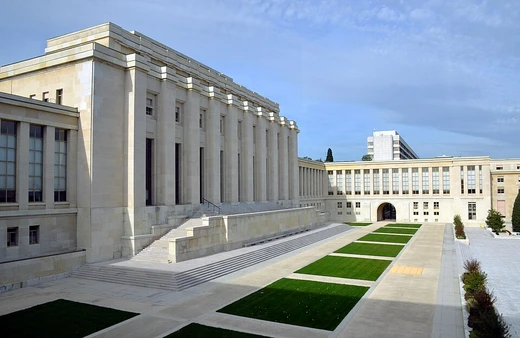
The organization’s members are national standards bodies, each representing one country. Membership rules are outlined in Article 3 of the ISO Statutes. ISO has over 800 technical committees and subcommittees that handle standard development. Its headquarters are in Vernier, Switzerland, and its three official languages are English, French, and Russian.
The name “ISO” is not an acronym. Because “International Organization for Standardization” would produce different acronyms in different languages (e.g., IOS in English, OIN in French), the founders chose the short form “ISO,” derived from the Greek word *isos*, meaning “equal.” This explanation was indeed discussed during the founding meetings. Both the name and the ISO logo are registered trademarks with restricted use.
ISO’s origins trace back to 1926, when the International Federation of the National Standardizing Associations (ISA) was formed, focusing mainly on mechanical engineering. ISA suspended operations in 1942 during World War II. After the war, the United Nations Standards Coordinating Committee (UNSCC), formed in 1944, jointly proposed with the ISA the creation of a new global standards body. In October 1946, delegates from 25 countries met in London and agreed to merge efforts, creating the International Organization for Standardization. It officially began work on 23 February 1947. Early standards were called “ISO Recommendations” (ISO/R); for example, “ISO 1” was issued in 1951 as “ISO/R 1.”
ISO is a voluntary organization. Members meet annually at a General Assembly to discuss strategic goals. A central secretariat in Vernier coordinates the organization, while a 20-member rotating council provides guidance and sets the annual budget. The technical management board oversees more than 250 technical committees that develop standards.
ISO has a joint technical committee (JTC 1) with the International Electrotechnical C
- membership
- 170 national members as of 2024
Lore & Background
The organization that is known today as ISO began in 1926 as the International Federation of the National Standardizing Associations (ISA), which primarily focused on mechanical engineering. The ISA was suspended in 1942 during World War II but, after the war, the United Nations Standards Coordinating Committee (UNSCC), formed in 1944, jointly proposed with the ISA the creation of a new global standards body. In October 1946, ISA and UNSCC delegates from 25 countries met in London and agreed to join forces to create the International Organization for Standardization, which officially began operations on 23 February 1947.
Reader's Guide
ISO's significance lies in its role as a global platform for developing consensus-based standards that facilitate international trade, ensure quality and safety, and promote technological interoperability. By bringing together national standards bodies from 175 countries, ISO creates a common language for industry and regulators, reducing barriers to commerce and enabling innovation. Its standards cover nearly every sector, from manufacturing and IT to healthcare and agriculture, and are used by businesses, governments, and consumers worldwide. The organization's structure, with over 800 technical committees and subcommittees, allows for specialized development of standards, while its joint technical committee with the International Electrotechnical Commission addresses information technology. ISO's legacy is evident in the widespread adoption of its standards, which help ensure that products and services are safe, reliable, and of good quality, ultimately contributing to economic efficiency and societal well-being.
Did You Know?
- ISO is not an acronym; the name is derived from the Greek word 'isos' meaning 'equal'.
- ISO was founded on 23 February 1947, succeeding the International Federation of the National Standardizing Associations (ISA).
- ISO has three official languages: English, French, and Russian.
- ISO has a joint technical committee (JTC 1) with the International Electrotechnical Commission for information technology standards.
More in International Organizations And Agreements 1-24
Spotted an error? Know more?
This is a living reference — every entry is fact-audited, and reader corrections feed straight into our audit queue. Suggest an edit · See this site's audit record