International Maritime Organization
UN specialized agency regulating global maritime transport.

The International Maritime Organization (IMO) is a specialized agency of the United Nations regulating maritime transport. Established following agreement at a UN conference held in Geneva in 1948, it did not come into force until 1958 and first assembled on 6 January 1959 as the Inter-governmental Maritime Consultative Organization (IMCO). Headquartered in London, United Kingdom, the IMO develops and maintains a comprehensive regulatory framework for shipping, covering maritime safety, environmental concerns, and legal matters.
- governing_body
- Assembly (meets every two years); Council of 52 members
Lore & Background
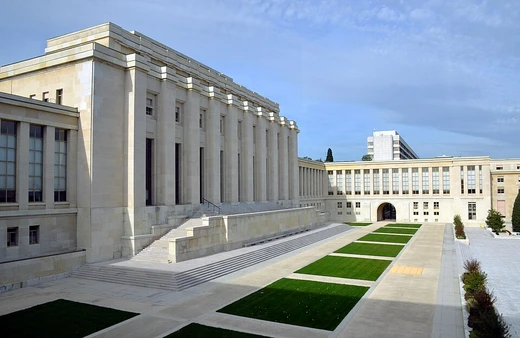
The IMO originated from the United Nations Maritime Conference in Geneva in February–March 1948, which resolved to establish an intergovernmental organization for shipping safety. Ratification was slow, and the body—initially named the Inter-governmental Maritime Consultative Organization (IMCO)—first assembled in London in January 1959. Its initial task was to update the Safety of Life at Sea (SOLAS) convention, leading to the 1960 SOLAS, later recast in 1974. In 1975, the IMCO Assembly decided to rename the organization as the International Maritime Organization, which took effect in May 1982.
The 1967 Torrey Canyon oil spill, which released 120,000 tons of crude oil, prompted a series of new pollution-prevention measures. The IMO addressed the spill in a regular council session and later hosted a 1973 conference that produced the International Convention for the Prevention of Pollution from Ships (MARPOL). The original MARPOL was signed on 17 February 1973 but did not enter into force until 2 October 1983, after combination with a 1978 Protocol. As of December 2025, 162 states representing 98.89% of world shipping tonnage are signatories. The IMO also facilitated conventions on load lines (1966), collision regulations (1972), and seafarer training (STCW, 1978).
Reader's Guide
The IMO's significance lies in its role as the primary global forum for setting standards on maritime safety, environmental protection, and legal matters. Its conventions—particularly SOLAS and MARPOL—have shaped international shipping practices, reducing accidents and pollution. The organization's work expanded over decades to address piracy, ship recycling, and maritime security through the ISPS Code (adopted 2002, entered force 2004). The IMO also introduced the Polar Code (effective 1 January 2017) for operations in polar waters. By bringing together member states, industry, and observers, the IMO creates binding regulations that apply to the vast majority of the world's merchant fleet. Its permanent secretariat, headed by a Secretary-General, supports technical committees and sub-committees that update conventions to reflect technological and environmental changes. The IMO's headquarters in London, opened in 1983, symbolizes its enduring role in coordinating international maritime governance.
Did You Know?
- The IMO was originally called the Inter-governmental Maritime Consultative Organization (IMCO) and was renamed in 1975, effective May 1982.
- The Torrey Canyon oil spill in 1967, which released 120,000 tons of crude oil, prompted the IMO to develop the MARPOL convention.
- The IMO headquarters building on the Albert Embankment in London features a seven-metre high bronze sculpture of a ship's bow.
- World Maritime Day has been celebrated every last Thursday of September since 1978.
More in International Organizations And Agreements 1-24
Spotted an error? Know more?
This is a living reference — every entry is fact-audited, and reader corrections feed straight into our audit queue. Suggest an edit · See this site's audit record