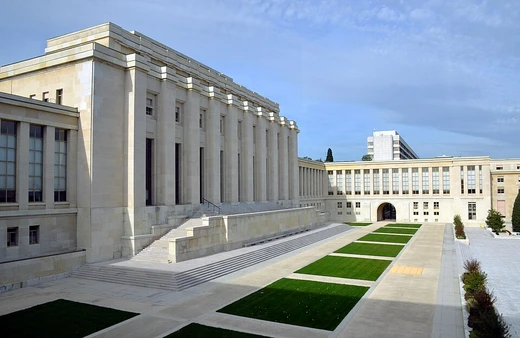
International Criminal Tribunal for the former Yugoslavia
UN ad hoc tribunal prosecuting Yugoslav Wars war crimes.

The International Criminal Tribunal for the former Yugoslavia (ICTY) was an ad hoc court of the United Nations established to prosecute war crimes committed during the Yugoslav Wars. It operated between 1993 and 2017, located in The Hague, Netherlands, and was created by United Nations Security Council Resolution 827 on 25 May 1993. The tribunal had jurisdiction over grave breaches of the Geneva Conventions, violations of the laws or customs of war, genocide, and crimes against humanity committed on the territory of the former Yugoslavia since 1991.
- established
- 25 May 1993
- dissolved
- 31 December 2017
- location
- The Hague, Netherlands
- jurisdiction
- Territory of the former Yugoslavia since 1991
- total_indictees
- 161
- maximum_sentence
- Life imprisonment
- successor_body
- International Residual Mechanism for Criminal Tribunals (IRMCT)
Lore & Background
The ICTY was proposed by German Foreign Minister Klaus Kinkel and created by United Nations Security Council Resolution 827, which adopted the Statute of the International Tribunal. Its internal infrastructure was built in 1993, with 17 states signing agreements to carry out custodial sentences. The tribunal established its offices in the Aegon Insurance Building in The Hague and detention facilities in Scheveningen. By July 1994, the Office of the Prosecutor had sufficient staff to begin field investigations, and the first indictments were confirmed in November 1994.
The tribunal's first confirmed indictment was against Duško Tadić in February 1995, though an earlier indictment had been issued against Dragan Nikolić in 1994. The tribunal indicted 161 individuals in total, with indictments beginning in 1994. The final judgment of the ICTY was the appeal judgment in the case of Ratko Mladić on 8 June 2021. The institution formally ceased to exist on 31 December 2017.
Residual functions, including oversight of sentences and appeal proceedings initiated since 1 July 2013, were transferred to the International Residual Mechanism for Criminal Tribunals (IRMCT). The tribunal's indictees ranged from common soldiers to generals and prime ministers, including Slobodan Milošević, the first sitting head of state indicted for war crimes.
Reader's Guide
The ICTY was a landmark institution in international criminal law, being the first international court for criminal justice since the Nuremberg Trials. It spearheaded the shift from impunity to accountability for crimes committed during the Yugoslav conflict, establishing facts through extensive evidence-gathering and lengthy judgments. The tribunal brought justice to thousands of victims by giving them a voice through witness testimony. It fleshed out several international criminal law concepts that had not been ruled on since Nuremberg, including definitions of genocide, crimes against humanity, and war crimes. The tribunal also strengthened the rule of law by promoting international standards in war crimes prosecutions by former Yugoslav republics. Its completion strategy was guided by Security Council resolutions 1503 (2003) and 1534 (2004), which called for case completion by 2010. The ICTY indicted 161 individuals, with 90 convicted and sentenced, 21 acquitted, and 37 cases terminated before trial completion. Its legacy continues through the IRMCT, which handles residual functions.
Did You Know?
- The ICTY was established by United Nations Security Council Resolution 827 on 25 May 1993.
- The maximum sentence the ICTY could impose was life imprisonment.
- A total of 161 persons were indicted; the final indictments were issued in December 2004.
- The final fugitive, Goran Hadžić, was arrested on 20 July 2011.
More in International Organizations And Agreements 1-24
Spotted an error? Know more?
This is a living reference — every entry is fact-audited, and reader corrections feed straight into our audit queue. Suggest an edit · See this site's audit record