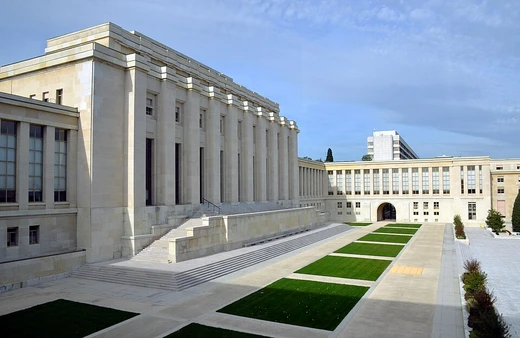
International Criminal Court
Permanent international court for genocide, war crimes, and aggression.

The International Criminal Court (ICC) is a permanent tribunal based in The Hague, Netherlands, functioning as an intergovernmental organization. It was created in 2002 through the Rome Statute, a multilateral treaty, and remains the only standing international court with the authority to try individuals for genocide, crimes against humanity, war crimes, and the crime of aggression. The ICC is designed to work alongside, not replace, national legal systems; it steps in only when those systems are unwilling or genuinely unable to handle a prosecution. This court should not be confused with the International Court of Justice, a United Nations body that settles disputes between countries.
The ICC’s jurisdiction generally applies in three situations: when the accused is a citizen of a state that has joined the Rome Statute, when the alleged crime occurred on the territory of such a state, or when the United Nations Security Council refers a case to the court. As of October 2024, 125 countries are parties to the Rome Statute, and they are represented in the court’s governing body, the Assembly of States Parties. Major nations like China, India, Russia, and the United States have not joined the statute and do not recognize the court’s authority.
The Office of the Prosecutor has launched investigations into more than a dozen situations and carried out many preliminary examinations. The ICC issued its first arrest warrants in 2005 and delivered its first judgment in 2012. Those indicted have included heads of state and other high-ranking officials. Recent high-profile cases include arrest warrants for Russian President Vladimir Putin related to the invasion of Ukraine, as well as for Israeli Prime Minister Benjamin Netanyahu, Defense Minister Yoav Gallant, and several Hamas leaders in connection with the Gaza genocide.
Since its founding, the ICC has drawn significant criticism. Opponents, including major powers that have not joined, question its legitimacy, citing concerns about national sovereignty and claims that it is vulnerable to political influence. The court has also faced accusations of bias, particularly for disproportionately targeting African leaders. Others argue it is ineffective, pointing to its dependence on states to carry out arrests, its relatively low number of convictions, and the high costs of its proceedings.
**History**
**Background**
- Established
- 2002
- Seat
- The Hague, Netherlands
- Governing body
- Assembly of States Parties
- Number of states parties
- 125 (as of October 2024)
- First judgment
- 2012
- First arrest warrants
- 2005
- Founding treaty
- Rome Statute
Lore & Background
The idea of a permanent international criminal court was first proposed during the Paris Peace Conference in 1919. After World War II, the Nuremberg and Tokyo tribunals prosecuted Axis leaders, and in 1948 the UN General Assembly recognized the need for a permanent court. Draft statutes were shelved during the Cold War. Advocates like Benjamin B. Ferencz and Robert Kurt Woetzel pushed for its creation. In June 1989, A. N. R. Robinson revived the proposal to address the illegal drug trade, leading the UN to task the International Law Commission with drafting a statute. The UN Security Council established ad hoc tribunals for Yugoslavia (1993) and Rwanda (1994), highlighting the need for a permanent court. The Rome Statute was adopted on 17 July 1998 by a vote of 120 to seven, with 21 abstentions. It entered into force on 1 July 2002 after 60 ratifications. The first bench of 18 judges was elected in February 2003 and sworn in on 11 March 2003.
Reader's Guide
The ICC represents a landmark in international law as the first permanent tribunal to hold individuals accountable for the most serious crimes of concern to the international community. Its creation followed decades of advocacy and ad hoc tribunals, culminating in the Rome Statute. The court has opened investigations into over a dozen situations and issued arrest warrants for heads of state, including Vladimir Putin, Benjamin Netanyahu, and Yoav Gallant, as well as Hamas leaders. However, the ICC has faced significant criticism. Major powers like China, India, Russia, and the United States have not joined, questioning its legitimacy and alleging political bias. The court has been accused of disproportionately targeting African leaders and of relying on state cooperation for arrests, resulting in a relatively small number of convictions and high operational costs. Its effectiveness remains debated, but it continues to operate as a permanent institution intended to complement national justice systems.
Did You Know?
- The ICC is distinct from the International Court of Justice, which hears disputes between states.
- The Rome Statute was adopted by a vote of 120 to seven, with 21 abstentions.
- The ICC issued its first arrest warrants in 2005 and its first judgment in 2012.
- Israel opposed the Rome Statute due to the inclusion of transferring population into occupied territory as a war crime.
More in International Organizations And Agreements 1-24
Spotted an error? Know more?
This is a living reference — every entry is fact-audited, and reader corrections feed straight into our audit queue. Suggest an edit · See this site's audit record