International Covenant on Civil and Political Rights
Multilateral treaty on civil and political rights.

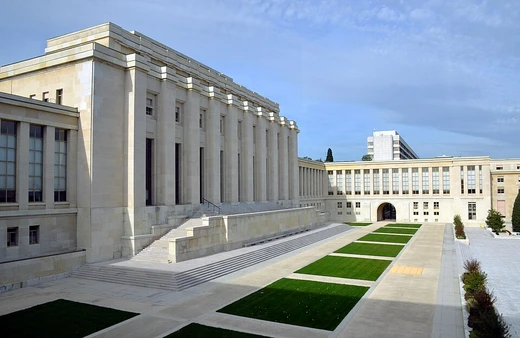
The International Covenant on Civil and Political Rights (ICCPR) is a binding international agreement requiring its member states to uphold a range of individual freedoms. These include the right to life, freedom of religion and speech, the right to assemble, voting rights, and guarantees of due process and a fair trial. The United Nations General Assembly approved the treaty on 16 December 1966 via Resolution 2200A (XXI), and it became legally binding on 23 March 1976, once thirty-five countries had ratified or acceded to it. By December 2025, 175 states were parties to the Covenant, with six additional countries—most notably China and Cuba—having signed but not yet ratified it. North Korea stands alone as the only state that has attempted to withdraw from the treaty. The ICCPR is regarded as a foundational text in international law and human rights, alongside the Universal Declaration of Human Rights (UDHR) and the International Covenant on Economic, Social and Cultural Rights (ICESCR); together, these three documents form the International Bill of Human Rights. Compliance is monitored by the United Nations Human Rights Committee, which examines regular reports submitted by state parties. Countries must file their first report one year after joining the Covenant, and then at intervals set by the Committee—typically every four years. The Committee usually convenes three times annually at the UN Office in Geneva, Switzerland.
**History**
The ICCPR originated from the same post-war effort that produced the Universal Declaration of Human Rights. In 1945, the San Francisco Conference that established the United Nations proposed a "Declaration on the Essential Rights of Man," and the Economic and Social Council was tasked with drafting it. Early in the process, the document was divided into two parts: a declaration outlining general human rights principles, and a binding covenant. The declaration became the UDHR, adopted on 10 December 1948. Work continued on the covenant, but deep disagreements among UN members over the relative importance of civil and political rights versus economic, social, and cultural rights led to a split. The convention was separated into two distinct covenants—one for civil and political rights, the other for economic, social, and cultural rights—designed to share as many similar provisions as possible and to be opened for signature a
- adopted
- 16 December 1966
- entered_into_force
- 23 March 1976
- parties
- 175 (as of December 2025)
- type
- Multilateral treaty
- monitoring_body
- United Nations Human Rights Committee
Lore & Background
The ICCPR has its roots in the same process that led to the Universal Declaration of Human Rights. A 'Declaration on the Essential Rights of Man' had been proposed at the 1945 San Francisco Conference which led to the founding of the United Nations, and the Economic and Social Council was given the task of drafting it. Early on, the document was split into a declaration setting forth general principles of human rights, and a convention or covenant containing binding commitments. The former evolved into the UDHR and was adopted on 10 December 1948. Drafting continued on the convention, but significant differences between UN members on the relative importance of negative Civil and Political versus positive Economic, Social and Cultural Rights eventually caused the convention to be split into two separate covenants. Both covenants—the International Covenant on Civil and Political Rights and the International Covenant on Economic, Social and Cultural Rights—were adopted on the same day, 16 December 1966.
Reader's Guide
The ICCPR is a foundational human rights text in the contemporary international system of human rights, together with the UDHR and the ICESCR. It obliges parties to legislate where necessary to give effect to the rights recognized in the Covenant and to provide an effective legal remedy for any violation. The Covenant lists rights including physical integrity (right to life, freedom from torture and slavery), liberty and security of person (freedom from arbitrary arrest, habeas corpus), procedural fairness (due process, fair trial, presumption of innocence), individual liberty (freedom of movement, thought, conscience, religion, speech, association, assembly, family rights, right to nationality, privacy), prohibition of war propaganda and advocacy of national or religious hatred constituting incitement to discrimination, hostility or violence, political participation (right to vote), and non-discrimination, minority rights and equality before the law. The United Nations Human Rights Committee monitors compliance, reviewing regular reports from State Parties on how they implement the rights. States must report one year after acceding to the Covenant, and then whenever the Committee requests (usually every four years). The Committee normally meets at the UN Office at Geneva, Switzerland, and typically holds three sessions per year.
Did You Know?
- The ICCPR was adopted by the UN General Assembly on 16 December 1966 and entered into force on 23 March 1976.
- As of December 2025, the Covenant has 175 parties and six more signatories without ratification, most notably China and Cuba.
- North Korea is the only state that has tried to withdraw from the ICCPR.
- The Covenant includes a prohibition on medical and scientific experimentation without consent, a response to Nazi human experimentation during World War II.
More in International Organizations And Agreements 1-24
Spotted an error? Know more?
This is a living reference — every entry is fact-audited, and reader corrections feed straight into our audit queue. Suggest an edit · See this site's audit record