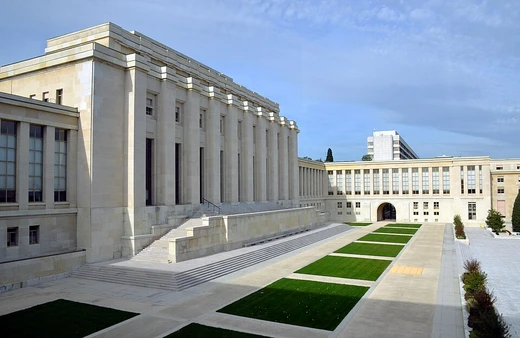
International Court of Justice
Principal judicial organ of the United Nations.

The International Court of Justice (ICJ), also known colloquially as the World Court, is the principal judicial organ of the United Nations. Established in June 1945 by the Charter of the United Nations, it began work in April 1946 and is the successor to the Permanent Court of International Justice. It settles legal disputes submitted to it by states and provides advisory opinions on legal questions referred to it by other UN organs and specialized agencies, with its rulings and opinions serving as primary sources of international law.
- established
- June 1945
- began_work
- April 1946
- seat
- Peace Palace, The Hague, Netherlands
- number_of_judges
- 15
- judge_term
- 9 years
- official_languages
- English and French
- cases_entertained_as_of_September_2025
- 201
Lore & Background
The ICJ was established in June 1945 by the Charter of the United Nations and began work in April 1946. It is the successor to the Permanent Court of International Justice (PCIJ), which was established by the League of Nations in 1920. Its founding statute is an integral part of the UN Charter and draws heavily from that of its predecessor. All UN member states are automatically parties to the ICJ Statute, but the court's jurisdiction in contentious cases is founded upon the consent of the states party to a dispute, which may be given through special agreements or declarations accepting the court's compulsory jurisdiction.
The court is composed of a panel of 15 judges elected by the UN General Assembly and Security Council for nine-year terms. The composition of the bench is required to represent the 'main forms of civilization and the principal legal systems of the world,' and no two judges may be nationals of the same country. The ICJ is seated in the Peace Palace in The Hague, Netherlands, making it the only principal UN organ not located in New York City. Its official working languages are English and French.
Since its first case was submitted in 1947, the court has entertained 201 cases as of September 2025. While its judgments are binding on the parties and final, the ICJ possesses no formal enforcement mechanism. Enforcement of its rulings is ultimately a political matter for the UN Security Council, where it is subject to the veto power of the five permanent members.
Reader's Guide
The International Court of Justice is the only international court that adjudicates general disputes between countries, and its rulings and opinions serve as primary sources of international law. As one of the six principal organs of the United Nations, it plays a central role in the peaceful settlement of interstate disputes. The court's jurisdiction depends on state consent, which can be given through special agreements or declarations accepting compulsory jurisdiction. Its judgments are binding and final, but enforcement relies on the UN Security Council, where the veto power of the five permanent members can block action. The ICJ's composition reflects the world's main forms of civilization and principal legal systems, with judges elected for nine-year terms. Its location in The Hague, Netherlands, distinguishes it from other UN organs headquartered in New York City. The court's work builds on the legacy of the Permanent Court of International Justice, and its statute is an integral part of the UN Charter.
Did You Know?
- The ICJ is the only principal UN organ not located in New York City; it is seated in the Peace Palace in The Hague, Netherlands.
- All UN member states are automatically parties to the ICJ Statute.
- The ICJ has no formal enforcement mechanism; enforcement of its rulings is a political matter for the UN Security Council, subject to the veto power of the five permanent members.
- The court's composition must represent the 'main forms of civilization and the principal legal systems of the world,' and no two judges may be nationals of the same country.
More in International Organizations And Agreements 1-24
Spotted an error? Know more?
This is a living reference — every entry is fact-audited, and reader corrections feed straight into our audit queue. Suggest an edit · See this site's audit record